










HOW ADIDAS TOOK THE BALL
The FIFA World Cup™ has been the pinnacle of global soccer since the first match was played in 1930. In the early years, each host nation supplied their own match ball, resulting in major inconsistencies in quality and performance. Because most balls were crafted from brown leather, they were also tough to spot on black-and-white TV.
Fast forward to 1970. To bring consistency to the tournament and elevate the standard of play, FIFA tapped adidas to become the official match ball supplier. It was the start of a legacy that has changed the look and feel of the game ever since.
Every ball tells a story—and it all starts with the Telstar.
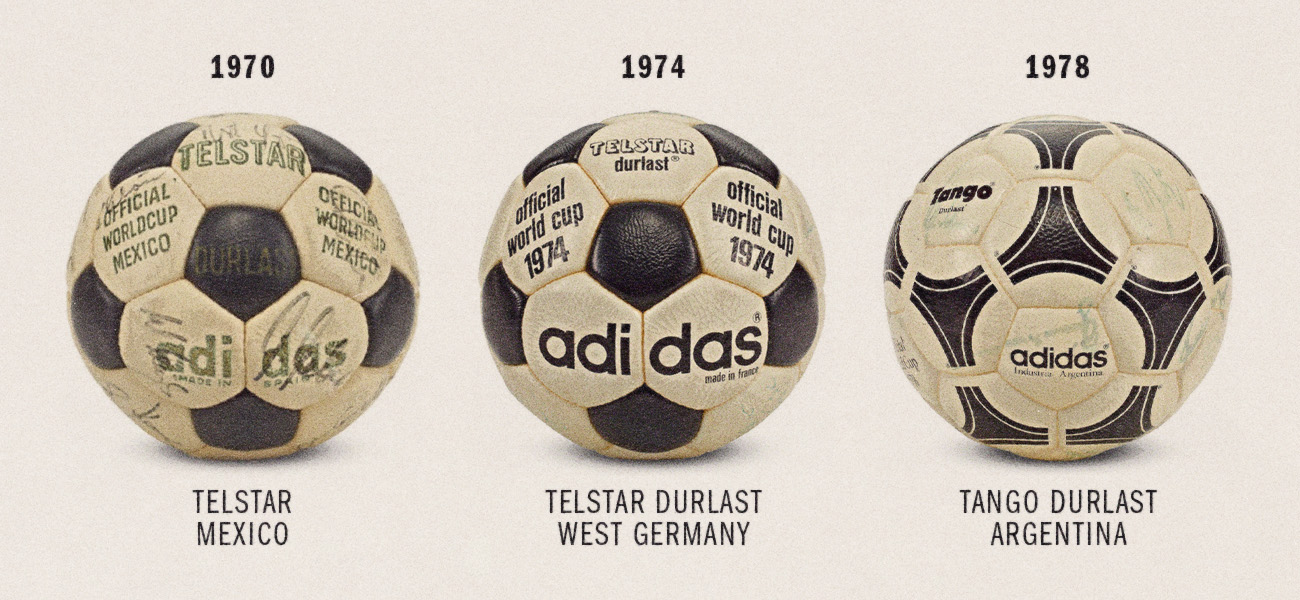
1970: TELSTAR—Mexico
Designed to stand out on worldwide television broadcasts, the Telstar derives its name from “Television” and “Star.” The ball’s 32-panel design is so iconic that it’s still what most people think of when asked to draw a soccer ball.
1974: Telstar Durlast—West Germany
The Telstar Durlast drafted off its predecessor and introduced a revolutionary waterproof coating to provide more durability and control in all conditions.
1978: Tango Durlast—Argentina
Inspired by the classic dance of Argentina, the Tango Durlast featured 20 hexagonal panels with curved triad shapes. The visual design of the Tango was so successful that it extended to the next five World Cup match balls.
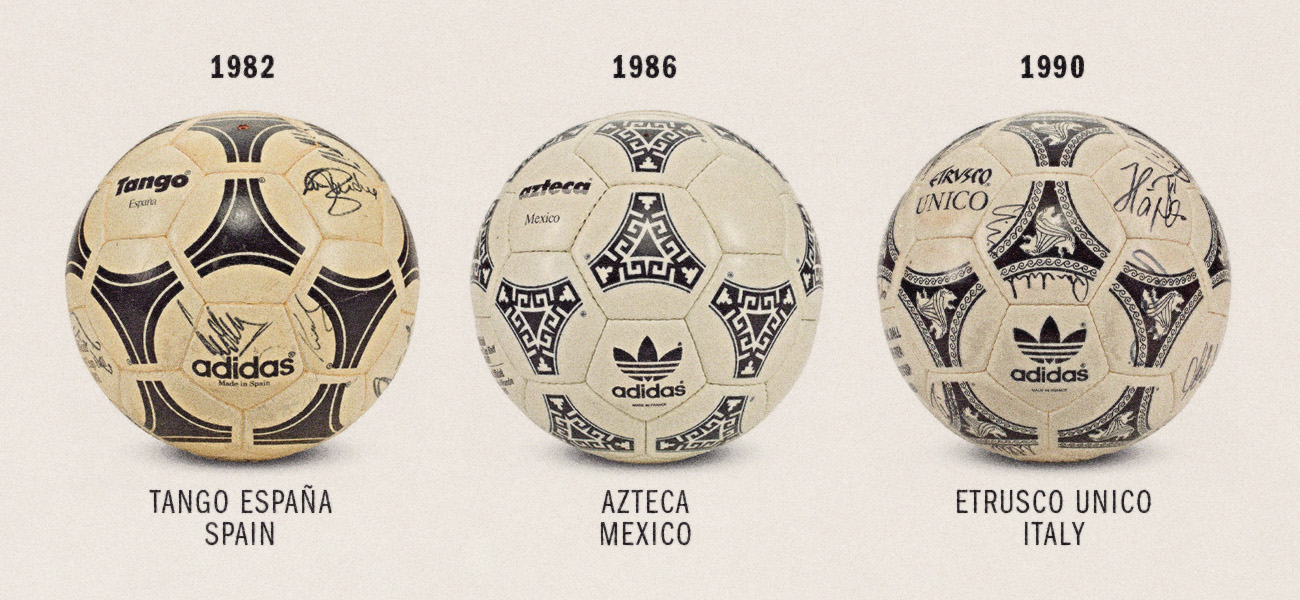
1982: Tango España—Spain
Besides being the last leather World Cup match ball, the Tango España was the first ball on the World Cup stage to feature the adidas Trefoil logo. With rubber-infused seams, it was also significantly more water resistant.
1986: Azteca—Mexico
The Azteca was the first match ball made from synthetic materials, which significantly reduced water absorption. With graphics inspired by Aztec temples, it was the first time a ball’s look reflected the culture of the host nation.
1990: Etrusco Unico—Italy
Inspired by ancient Etruscan art, the Etrusco Unico was the first FIFA World Cup ball to launch alongside a full footwear and apparel collection—and the first to feature an internal layer of water-repellent foam.
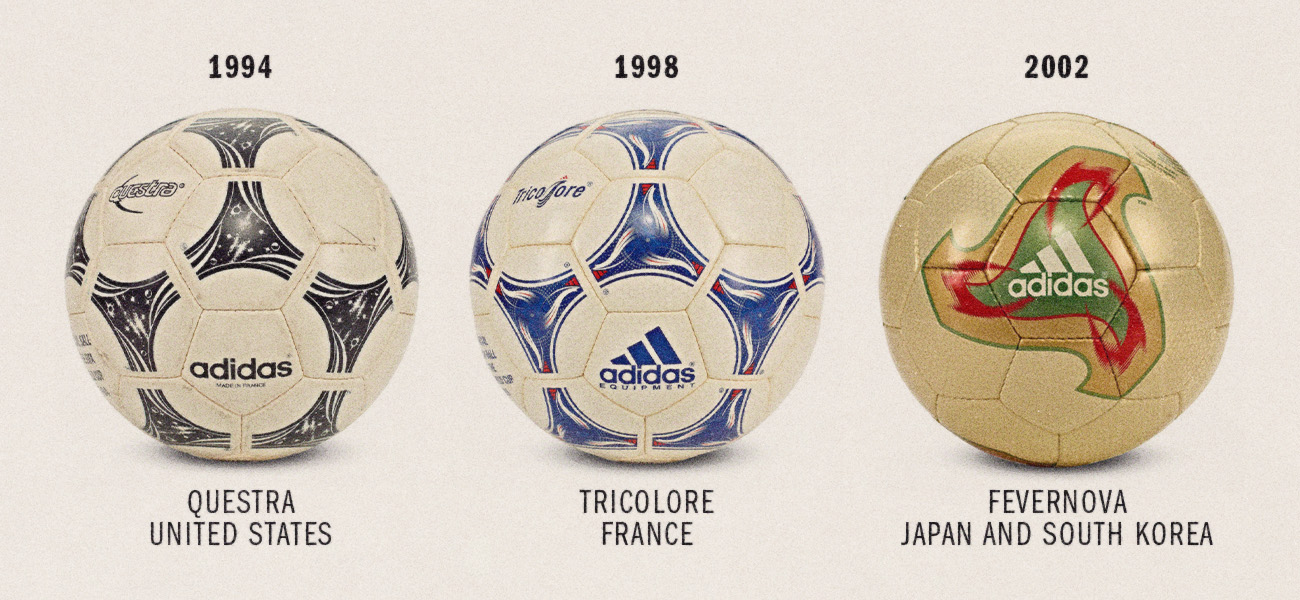
1994: Questra—United States
Created to honor the 25th anniversary of the moon landing, the Questra was named to reflect humanity’s quest for the stars. Its space-themed graphics reflected the spirit of innovation, while an internal foam layer softened the force of headers.
1998: Tricolore—France
Closing an era of design history, the Tricolore was the first match ball to move beyond black and white and the last to feature the iconic Tango pattern. Inside the ball, thousands of foam microcells made the Tricolore especially light, strong and fast.
2002: Fevernova—Japan and South Korea
The Fevernova hit the field with bold graphics inspired by Japanese calligraphy and tomoe symbols shared by both host nations. Performance upgrades included an upgraded foam core to create a more predictable flight path.
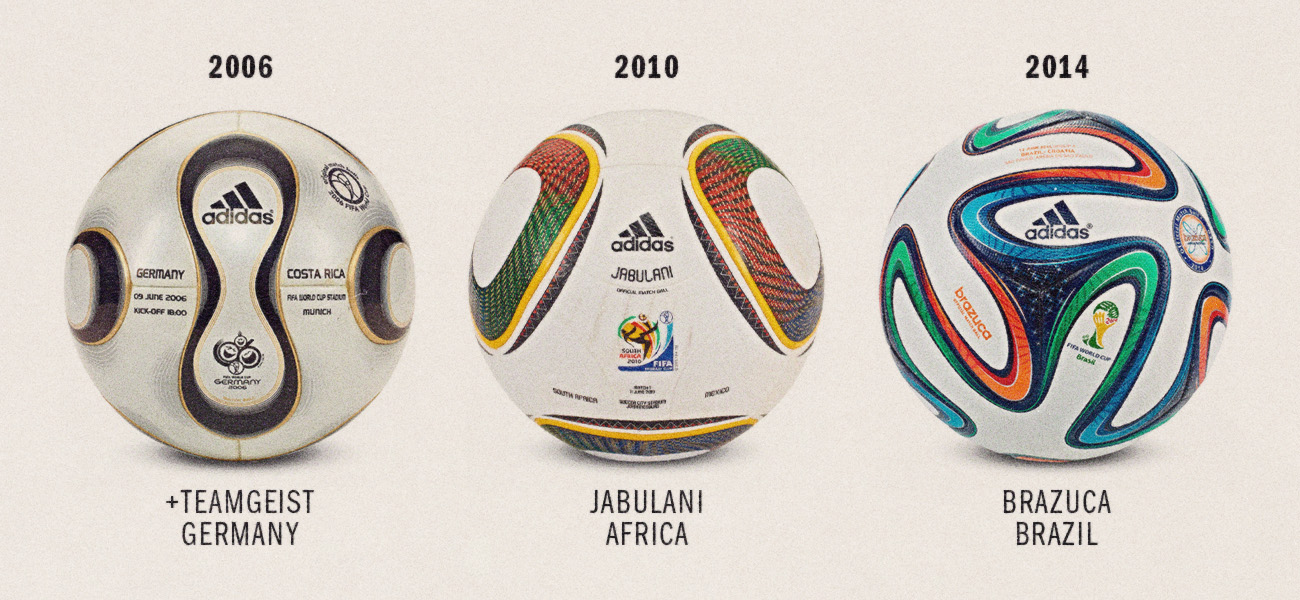
2006: +Teamgeist—Germany
The +Teamgeist revolutionized ball design, replacing the traditional 32 stitched with 14 thermally bonded panels to create a seamless surface. The +Teamgeist was also the first to release a special edition ball for the final match.
2010: Jabulani—South Africa
Meaning “to celebrate” in isiZulu, the Jabulani was designed with just eight panels and an innovative textured surface for improved grip. Eleven unique colors on the ball represent the 11 players on each team, South Africa’s 11 official languages, and the country’s 11 diverse communities.
2014: Brazuca—Brazil
Not only was the Brazuca (a term that describes Brazilian national pride) the first World Cup ball to be named by public vote, it was also the first to have its own Twitter account. Colorful ribbon graphics represent the wish bracelets worn throughout the country.
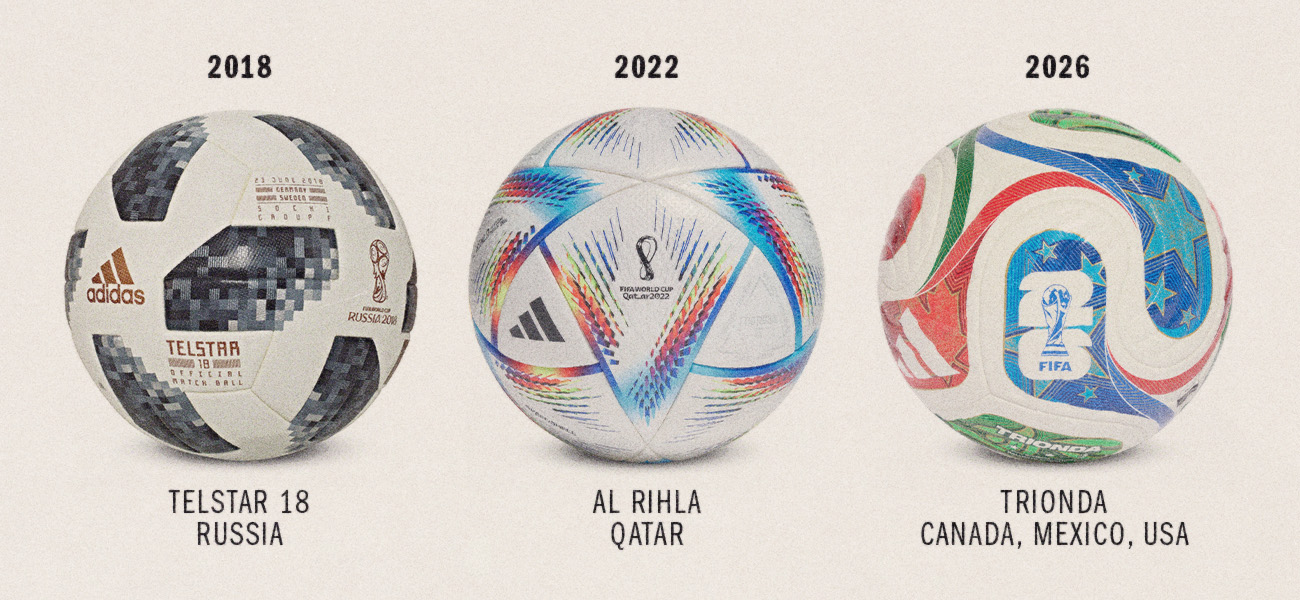
2018: Telstar 18—Russia
The Telstar 18 revived the iconic look of the original 1970 Telstar and updated it with a bold pixelated design for the modern game. An additional internal layer delivered new levels of durability, while an embedded NFC chip connected fans to exclusive content.
2022: Al Rihla—Qatar
The Al Rihla takes its visual inspiration from Qatar’s striking architecture and vibrant culture. It introduced a new Speedshell surface for improved aerodynamics and an eco-friendly design crafted exclusively with water-based inks and glues.
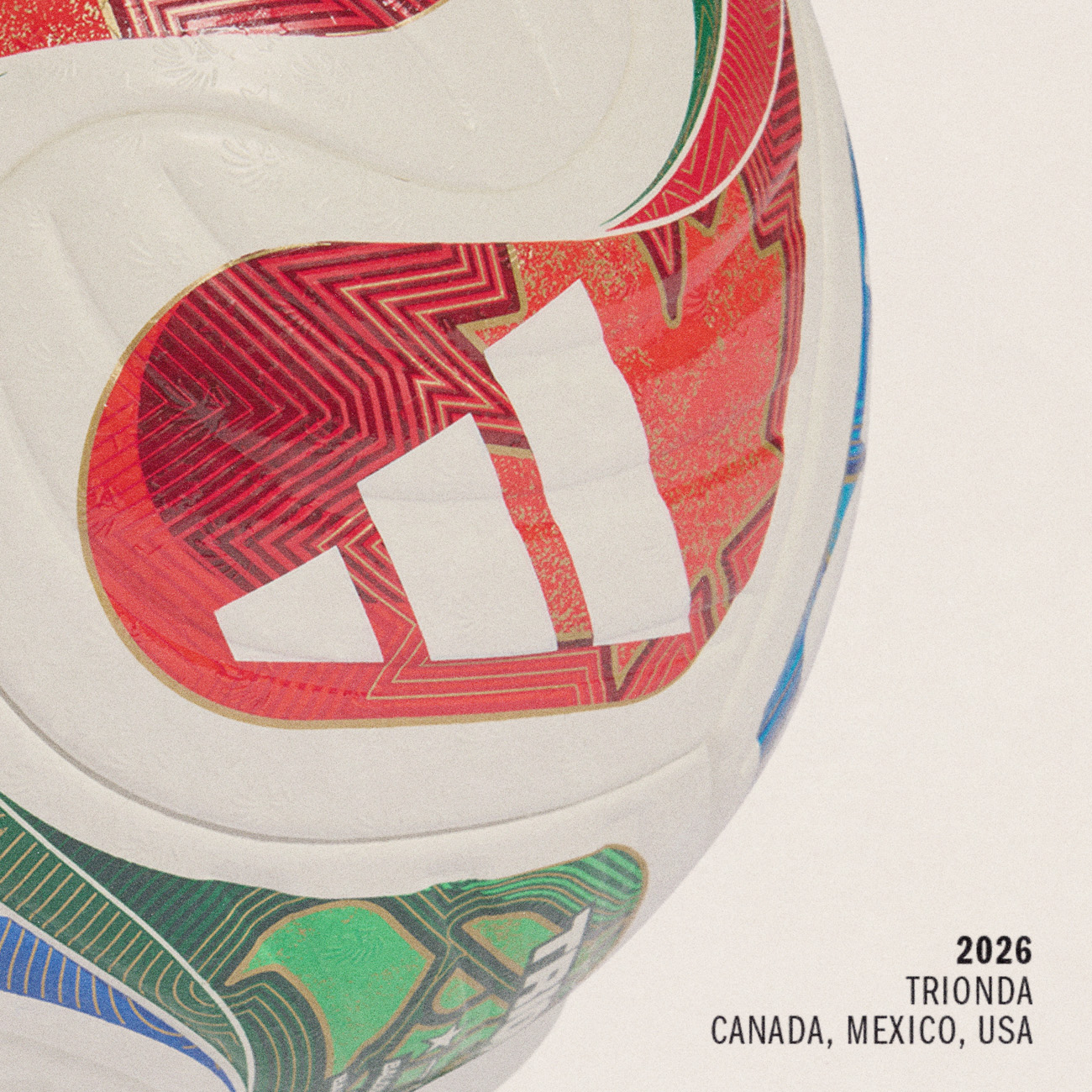
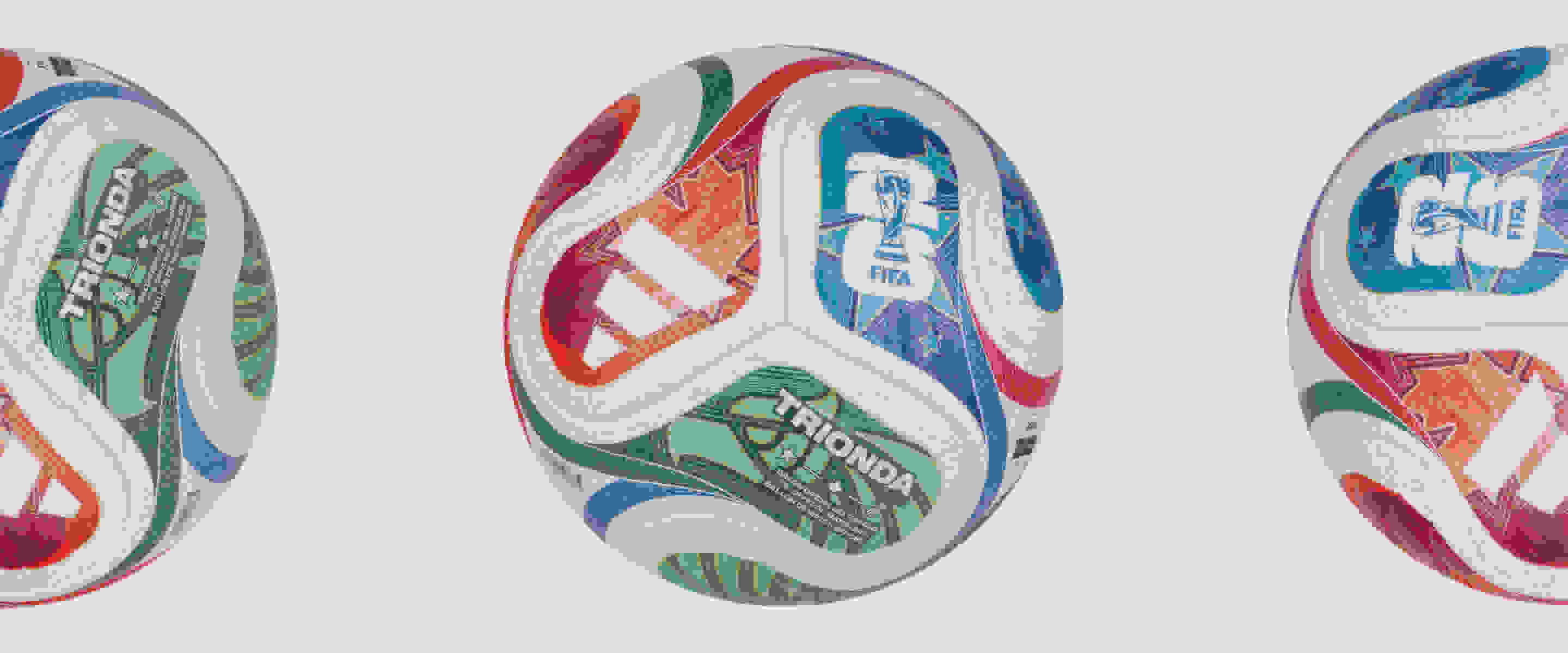
2026: Trionda—Canada, Mexico, USA
Exploding onto soccer’s biggest stage, the Trionda—a fusion of tri (three) and onda (wave)—pays tribute to the unique co-host trio for 2026. Each host country is represented in the Trionda’s tricolor graphic: red maple leaves for Canada, a green eagle for Mexico, and blue stars for the United States. As for the flowing wave design, that’s inspired by “la ola,” the iconic spectator wave first spotted at sporting venues throughout the Americas.
“The Trionda is the most visually playful FIFA World Cup ball we’ve ever created,” said Sam Handy, General Manager of adidas soccer. “It’s a piece of craftsmanship that makes you want to hold it, admire it, and above all, play with it.”
From a performance point of view, the Trionda’s four-panel construction features intentionally deep seams and strategically placed debossed lines to minimize drag and optimize in-flight stability. The textured surface provides elevated grip, ensuring players experience the same accuracy and control whether they’re threading a pass or striking from distance.
The Trionda also debuts the latest adidas Connected Ball Technology in the form of a new innovative side-mounted chip system. This provides unprecedented insight into every movement of the ball, sending precise real-time data to the VAR (Virtual Assistant Referee). Combined with player tracking and AI, Connected Ball Technology helps officials reduce review time and keep the game moving.
According to Solene Stoermann, Category Director at adidas, creating the Official Match Ball for FIFA World Cup 26 was a labor of love for the team.
“As soon as the tournament hosts were announced, we knew we had to make something special,” she said. “Next summer, Trionda is set to be a main character in the biggest show on earth, and we cannot wait for fans and players to enjoy the moment.”
Follow @Trionda on TikTok for a first-person POV of the Official Match Ball in action from now through to the FIFA World Cup next summer.